
American Beautyberry/Callicarpa americana
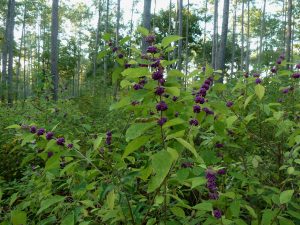
Photo from FANN Eleanor
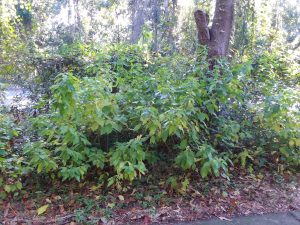
Photo from iNaturalist user Nonbinary Naturalist
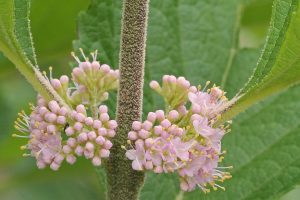
Photo from FANN Mary Keim
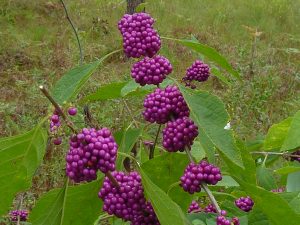
Photo from FANN Eleanor
Photo from FANN Eleanor
Phonetic Spelling kal-ee-KAR-puh a-mer-ih-KAY-nah Plant Type: Multistem shrub Plant Height: 4-10’ Plant Spread: 4-8’ Sunlight Preference: Full sun to partial shade. Soil Preference: Prefers moist, rich, well-draining soils, but is adaptable to most soil types if watered in and established correctly. Uses in Landscaping: Accent plant, hedge/screen row in a garden, planted under partial shade of a tree. Can be mixed with climbing plants to add more color as leaves fall off in the winter. How and When to Plant: Can be planted year-round but winter planting when plants are dormant and dropped leaves are best. Once in the ground plants should be watered twice a week for two weeks so plants can establish. Then once a week or as needed to keep the plant happy. Once established watering is not needed unless signs of drought are showing on the leaves. If planted in winter, you will know if planting was successful if leaf out happens by May at the latest. Plants should be at least 6 feet from houses, if wanting no upkeep plants should be planted 10 feet from houses or structures so branches do not make contact. Upkeep: Once established and growing this plant requires little to no upkeep, if plant is growing too big or branches are touching structures and need pruning, prune in the wet months of summer June-August as these plants will back bud and resprout in no time with all of the extra water. Plants can be even cut from the base and will resprout via trunk/roots. This plant can spread via seeds and may need to be removed. Charismatic/ID Features: Flowers/Fruit: Flowers are small and light pink occurring right where the leaf and stem meet. Flowers are typically found in summer, May-August and fruits develop afterwards. Fruits are small spherical and pink to purple in color (some albino varieties are sold at select nurseries). Fruits are popular forage for birds throughout the winter as well. Leaves: Leaves are opposite of one another and have broad serrations along the edge. If crushed and sniffed the leaves have a pleasant perfume like smell that makes ID easy (young twigs also smell this way). Leaves are fuzzy on the top and bottom making them easy to ID as well. Leaves are deciduous so they will fall off in the winter. Bark: Bark is mainly smooth and a silvery grey color with occasionally raised bumps along the stems. Young twigs are fuzzy and when fingers are rubbed on them and sniffed they will have that same characteristic smell as the leaves.